
Al-Nassr 3-0 FC Goa: Saudi Giants Cruise to Dominant Victory in Riyadh
On a balmy evening at King Saud University Stadium in Riyadh, Saudi Arabia's Al-Nassr delivered a comprehensive 3-0 victory over Indian Super League side FC Goa in their AFC Champions League Two Group D encounter on November 5, 2025. The result consolidated Al-Nassr's position at the top of the group with a perfect record of four wins from four matches, accumulating 12 points and effectively securing their passage to the Round of 16 with two matches still to spare. For FC Goa, the defeat marked their fourth consecutive loss in the continental campaign, leaving them rooted to the bottom of the table with zero points and their qualification hopes extinguished.
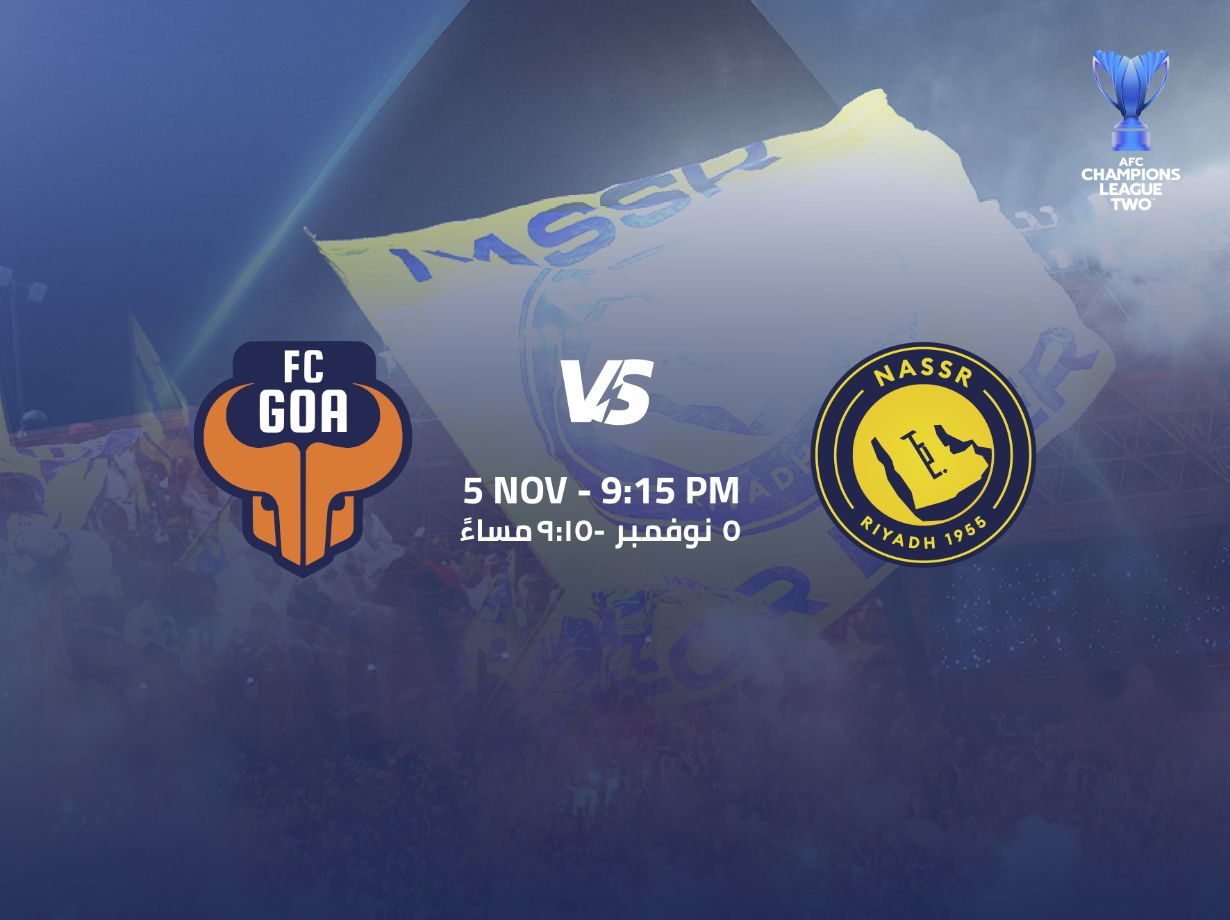
Match schedule for Al Nassr vs FC Goa in AFC Champions League Two on November 5 at 9:15 PM.
Match Chronicle: A One-Sided Affair
The match unfolded as a tactical mismatch from the opening whistle, with Al-Nassr's superior technical quality and physical prowess overwhelming the Indian visitors. Playing without their marquee superstar Cristiano Ronaldo, who was present at the stadium but not included in the matchday squad, the Saudi champions nevertheless fielded a formidable lineup featuring emerging Saudi talent and established international stars on the bench.
Al-Nassr's dominance was evident in the possession statistics, with the hosts controlling approximately 76% of the ball compared to FC Goa's 24%. This overwhelming territorial advantage translated into sustained pressure on the Indian defense throughout the 90 minutes, creating numerous goal-scoring opportunities that ultimately yielded three clinical finishes.
First Half: Ghareeb Opens the Floodgates
The breakthrough arrived in the 35th minute when Abdulrahman Ghareeb broke the deadlock with a magnificent free-kick that sailed into the net, giving Al-Nassr a deserved lead. The 28-year-old Saudi international, who has been a consistent performer for Al-Nassr across multiple competitions, demonstrated his set-piece expertise with a powerful strike that left FC Goa goalkeeper Hrithik Tiwari with no chance.
Ghareeb's opening goal set the tone for what would become a comfortable evening for the hosts, as FC Goa struggled to establish any meaningful attacking rhythm against Al-Nassr's well-organized defensive structure. The Indian side, playing their fourth away fixture in the competition, found it increasingly difficult to cope with the pace and precision of Al-Nassr's passing combinations.
Second Half: Ghareeb's Brace and Maran's Seal
The second half began with Al-Nassr continuing their relentless pressure, and their persistence paid dividends in the 53rd minute when Abdulrahman Ghareeb doubled his tally and Al-Nassr's lead. According to reports, Ghareeb "latched onto a clever threaded pass and smashed it into the roof of the net" for his second goal of the evening, showcasing his clinical finishing ability. The brace took Ghareeb's season tally to an impressive figure and underlined his importance to Jorge Jesus's attacking setup.
With the match effectively decided, Al-Nassr continued to dominate proceedings, and the third goal arrived in the 65th minute through Mohammed Maran. The 24-year-old Saudi forward, who has featured sporadically for Al-Nassr this season, capitalized on FC Goa's defensive disorganization to complete the scoring and put the result beyond any doubt. Maran's goal was his first in the AFC Champions League Two campaign and provided a fitting conclusion to a dominant team performance.
Tactical Analysis: The Gulf in Class
The 3-0 scoreline accurately reflected the chasm in quality between the two sides. Al-Nassr's tactical superiority was evident in multiple phases of play, from their controlled build-up through midfield to their incisive attacking transitions. The Saudi side's ability to maintain possession in dangerous areas consistently pinned FC Goa deep into their defensive third, forcing the Indian side to defend for extended periods.
FC Goa's defensive structure, while organized at times, was repeatedly breached by Al-Nassr's intelligent movement and quick combination play. The absence of sustained pressure on Al-Nassr's ball carriers allowed the hosts to dictate tempo and create high-quality chances throughout the match. The visitors' inability to transition effectively from defense to attack meant they rarely threatened Al-Nassr's goal, registering minimal shots on target.
Individual Performances
Abdulrahman Ghareeb was undoubtedly the standout performer, with his two-goal haul earning him plaudits from fans and pundits alike. The diminutive winger, standing at just 164 cm, has built a reputation as a versatile attacking player capable of operating across multiple positions in the forward line. His performance against FC Goa demonstrated his ability to influence matches at the continental level, combining technical skill with intelligent positioning and clinical finishing.
For FC Goa, the experience represented another harsh lesson in the demands of Asian club football. Despite showing improvement in defensive organization compared to their previous encounters, the Indian side simply lacked the technical quality and physical attributes to compete with Al-Nassr's star-studded squad. The Gaurs' foreign contingent, which had underperformed in the previous home fixture against Al-Nassr, again failed to provide the leadership and quality required at this level.
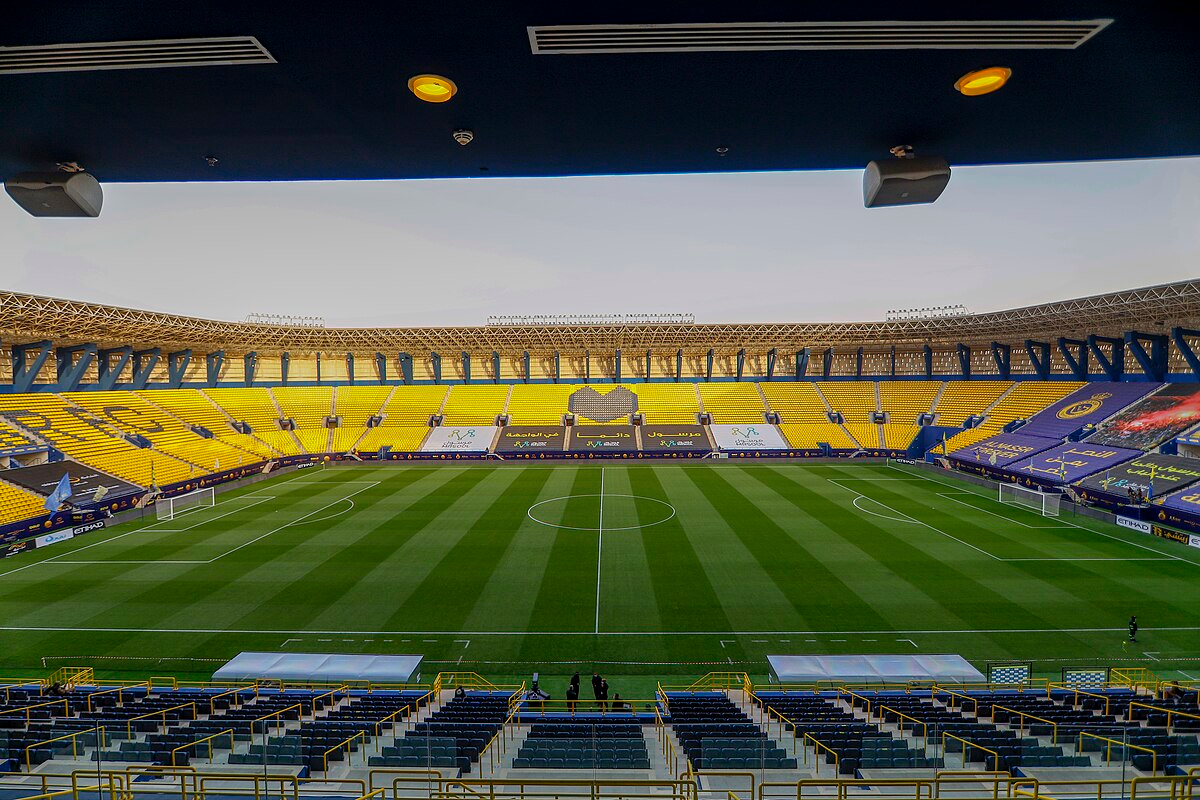
Inside view of King Saud University Stadium, home of Al-Nassr, showcasing the yellow seating and pristine football field.
The Ronaldo Factor: Present but Absent
One of the major talking points surrounding the match was the presence of Cristiano Ronaldo at the stadium despite his absence from the playing squad. The Portuguese legend, who has not featured in any AFC Champions League Two matches this season, traveled with the team to the venue but was not included even on the bench.
Al-Nassr's decision to rest Ronaldo for continental fixtures has been a deliberate strategy, with manager Jorge Jesus prioritizing the superstar's fitness for the more demanding Saudi Pro League campaign and potential AFC Champions League Elite qualification. While this disappointed many FC Goa fans who had hoped to witness the five-time Ballon d'Or winner in action, it also highlighted Al-Nassr's squad depth and their confidence in securing qualification without deploying their biggest star.
The star-studded bench for Al-Nassr included world-class players such as Sadio Mané, João Félix, Kingsley Coman, Marcelo Brozović, and Iñigo Martínez—a testament to the club's financial muscle and continental ambitions. The fact that these elite players remained unused underscored Al-Nassr's dominance and the relative ease with which they dispatched FC Goa.
FC Goa's Continental Struggles
For FC Goa, the 3-0 defeat represented another painful chapter in their challenging AFC Champions League Two campaign. The Gaurs entered the competition with optimism after winning the Kalinga Super Cup 2025, which earned them their place in Asia's second-tier club competition. However, the step up in quality from domestic Indian football to continental competition has proven significant.
Across four matches, FC Goa have managed just one goal—Brison Fernandes's historic strike in the reverse fixture at home against Al-Nassr on October 22. That goal represented a significant milestone for Indian football, as Fernandes became the first Indian player to score in the AFC Champions League Two group stage. The 24-year-old winger's moment of brilliance provided a glimmer of hope and pride for Indian football supporters, even in defeat.
Despite their winless record, FC Goa have shown glimpses of organization and fighting spirit, particularly in their home fixture against Al-Nassr where they lost narrowly 2-1. However, the cumulative effect of facing superior opposition has exposed the gap between Indian club football and the established powers of West Asian football.
Domestic Success Contrasts Continental Struggles
Interestingly, FC Goa's continental travails stand in stark contrast to their domestic form. The team qualified for the AFC Champions League Two semi-finals of the AIFF Super Cup 2025-26, recording impressive victories over Jamshedpur FC and Inter Kashi before narrowly losing to Northeast United FC. This domestic success demonstrates that the squad possesses quality and cohesion when competing against familiar opposition in home conditions.
The challenge for FC Goa and Indian club football more broadly is translating domestic competitiveness into continental success. The technical demands, physical intensity, and tactical sophistication required at the AFC Champions League Two level represent a significant step up from the Indian Super League. Exposure to these higher-quality opponents provides valuable learning experiences, but the immediate results have been sobering.
Group D Standings: Al-Nassr Cruise, FC Goa Eliminated
Following this result, the Group D standings paint a clear picture of the competitive hierarchy. Al-Nassr sit comfortably at the top with 12 points from four matches, having scored nine goals and conceded just one. Their goal difference of +8 reflects their dominance throughout the group stage, with victories over all three opponents.
FC Istiklol of Tajikistan occupy second place with six points from three matches, positioning themselves well for qualification to the knockout rounds. Al-Zawraa of Iraq are third with three points from three matches, while FC Goa remain bottom with zero points from four matches. The top two teams from each group advance to the Round of 16, meaning Al-Nassr have already secured their place with two matchdays remaining.
For FC Goa, mathematical elimination from the knockout stages means their remaining fixtures will serve as learning experiences and opportunities to restore some pride. The Gaurs still have matches against Al-Zawraa and FC Istiklol to complete their group-stage obligations.
Commentary and Insights: What This Match Reveals
The Saudi Investment Impact
Al-Nassr's comprehensive victory exemplifies the impact of Saudi Arabia's massive investment in football over recent years. The club's ability to field a competitive team without their star player, while maintaining world-class options on the bench, demonstrates the depth of resources at their disposal. This investment has transformed Saudi clubs into genuine Asian powerhouses capable of competing with the continent's traditional giants.
The presence of players like João Félix, Kingsley Coman, and Sadio Mané—all of whom have competed at the highest levels of European football—on Al-Nassr's bench would have been unthinkable just a few years ago. This transformation has significantly raised the competitive bar for clubs across Asia, creating a challenging environment for emerging football nations like India.
The Indian Football Development Challenge
FC Goa's struggles in the AFC Champions League Two highlight the developmental challenges facing Indian club football. While the Indian Super League has made significant strides in raising domestic standards, the gap to established Asian football nations remains substantial. The technical quality, tactical sophistication, and physical conditioning required to compete at this level represent areas where continued investment and development are necessary.
However, there are positive signs. Brison Fernandes's historic goal in the previous fixture demonstrated that Indian players can compete and succeed against top-quality opposition when given opportunities. The exposure gained from participating in continental competitions, even when results are disappointing, provides invaluable experience for players and coaches alike.
Tactical Lessons and Future Development
The tactical gulf between the two sides was evident throughout the 90 minutes. Al-Nassr's ability to dominate possession, control tempo, and create scoring opportunities through structured attacks contrasted sharply with FC Goa's more reactive approach. The Indian side's struggles in progressing the ball through midfield under pressure and creating sustained attacking threats are areas requiring significant improvement.
For FC Goa coach Manolo Marquez, these continental experiences provide crucial data points for future development. The Spanish manager's challenge is to identify tactical and technical improvements that can help his team become more competitive at this level while maintaining their domestic success.
The Broader Asian Football Landscape
This match also reflects broader trends in Asian club football, where financial disparities between regions create significant competitive imbalances. The AFC Champions League Two was designed to provide competitive opportunities for clubs from developing football nations, but the presence of well-resourced Saudi clubs in this second-tier competition has created challenges for that mission.
The restructured AFC Champions League system, which separated the elite competition from the second tier, was intended to create more balanced competition. However, the quality gap between clubs from different Asian regions remains significant, as evidenced by Al-Nassr's dominance in Group D.
Looking Ahead: Different Trajectories
For Al-Nassr, the focus now shifts to securing top spot in Group D and preparing for the knockout stages, where they will face tougher opposition. The club's continental ambitions extend beyond the AFC Champions League Two—their ultimate goal is to compete and succeed in the elite tier of Asian club football. With their squad depth and financial resources, they are well-positioned to challenge for the title and secure promotion to the AFC Champions League Elite.
Manager Jorge Jesus will be pleased with his team's professional performance and the continued development of domestic Saudi talent like Abdulrahman Ghareeb and Mohammed Maran. The ability to win convincingly while resting key players like Ronaldo demonstrates the squad's strength and readiness for the challenges ahead.
For FC Goa, the remaining fixtures represent opportunities to end their maiden AFC Champions League Two campaign on a positive note. While qualification is no longer possible, the team can focus on securing their first victory at this level and continuing the development of young Indian talent like Brison Fernandes. The experience gained from facing elite Asian opposition will prove valuable for the club's long-term development and future continental campaigns.
The contrast in resources, experience, and quality between these two sides encapsulates the challenges facing emerging Asian football nations. However, participation in competitions like the AFC Champions League Two remains crucial for clubs like FC Goa, providing exposure to higher standards and motivation for continued improvement.
Final Thoughts: A Lesson in Continental Football
The 3-0 scoreline tells a straightforward story of a superior team executing their game plan efficiently against overmatched opposition. Al-Nassr's clinical finishing, tactical discipline, and technical quality proved too much for a FC Goa side that, despite showing occasional flashes of competence, simply lacked the tools to compete at this level.
Abdulrahman Ghareeb's brace and Mohammed Maran's goal provided the highlights in a match that unfolded largely as expected. The absence of Cristiano Ronaldo proved irrelevant, as Al-Nassr's squad depth and quality shone through regardless. For neutral observers, the match demonstrated both the exciting ambition of Saudi Arabian football and the developmental journey still ahead for Indian clubs aspiring to continental success.
As the AFC Champions League Two group stage progresses, Al-Nassr will prepare for the knockout rounds with confidence, while FC Goa return home with valuable lessons and the determination to continue building toward future continental campaigns. The gulf in quality was evident, but the pathway forward for Indian football—through continued investment, development, and competitive exposure—remains clear.

No comments:
Post a Comment